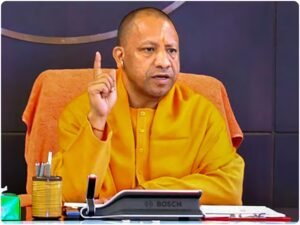
Chief Minister inaugurated a workshop on the subject of ‘Cold Wave Preparedness’
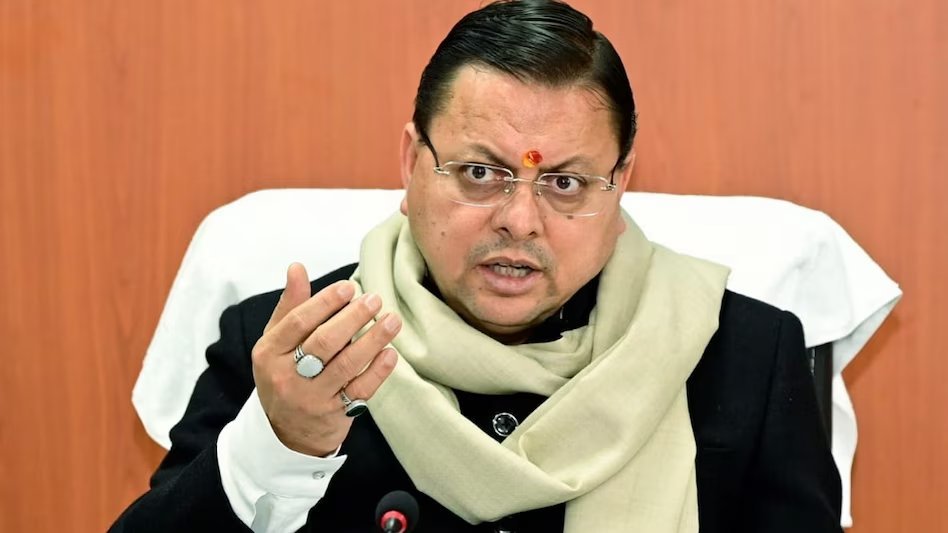
Disaster management is a collective responsibility, all departments should work in a coordinated manner – Chief Minister
Chief Minister Shri Pushkar Singh Dhami inaugurated a one-day workshop organised on the subject of ‘Cold Wave Preparedness’ at the Survey of India Auditorium, Hathibarkala, on Friday. On this occasion, he released the SOPs for cold waves, floods, mock exercises, air traffic assistance, the New Year Calendar 2026 of the Disaster Management Department and the Disaster Management Handbook. During the programme, the Chief Minister also honoured young disaster friends (Yuva Aapda Mitra) and individuals who performed commendable work in relief and rescue during disasters in the year 2025. Chief Minister also flagged off four vehicles provided by the State Bank of India for disaster management.
Chief Minister Shri Pushkar Singh Dhami stated that disaster management is not the responsibility of a single department; rather, the participation of the entire administration, local bodies, voluntary organisations and the general public is essential. He mentioned that under the visionary leadership of Prime Minister Shri Narendra Modi, disaster risk reduction has been made a major agenda in the country. Under his guidance, the Uttarakhand government is also laying special emphasis on adopting modern technologies in disaster management. Drone surveillance, GIS mapping, satellite monitoring and early warning systems are being strengthened in the state. Steps such as installing sensors in high-altitude areas, digital monitoring systems and the formation of modern rapid response teams are reducing disaster risks.
The Chief Minister said that in a Himalayan state like Uttarakhand, avalanches are a serious natural risk. Many areas of the state are considered extremely sensitive from an avalanche perspective. Making tourism, pilgrimage and mountaineering activities safe in these areas is the government’s top priority. He stated that the government is continuously working to strengthen the early warning system, maximize the use of modern technology, deploy trained rescue forces and make safe tourism protocols more effective. Several concrete and practical steps have also been taken in the state to effectively deal with challenges arising from cold waves and excessive snowfall. All districts have been linked to the early warning system and District Magistrates have been instructed to ensure adequate arrangements for bonfires, night shelters and blankets.
The Chief Minister said that the Meteorological Department, Disaster Management Department and local administration should maintain better coordination and ensure timely warnings and necessary preparations in cold wave and snowfall-affected areas by further strengthening the early warning system. To address health-related problems such as hypothermia, cold, flu and pneumonia during the cold wave, all district hospitals, health centres and mobile medical teams must be kept active. Especially in border and high-altitude areas, the supply of essential medicines, heating equipment and first aid materials must be ensured.
The Chief Minister stated that the state government is working towards further empowering initiatives like ‘Yuva Aapda Mitra’ and ‘Aapda Sakhi’ to promote community-based disaster management. Chief Minister expressed hope that through this workshop, the preparations to deal with potential challenges during the winter season would be reviewed and coordination between departments would be strengthened.
Chief Secretary Shri Anand Vardhan said that this is a commendable initiative towards strengthening the disaster management system in the state. He said that the cold wave shows its effect gradually, but its impact is dreadful. It affects the health services of the general public and particularly the lives of vulnerable people. It is necessary to see cold wave management not just as a challenge of seasonal management, but as an administrative and social responsibility. He said that under the visionary leadership of the Chief Minister, continuous work is being done to give a strong, organised and policy-based form to disaster management in the state.
Present on this occasion were Member of the National Disaster Management Authority Shri Rajendra Singh, Vice Chairman of the State Disaster Management Authority Shri Vinay Rohilla, Secretary of Disaster Management Shri Vinod Kumar Suman, Shri Anand Swarup, IG Garhwal Shri Rajiv Swarup, Additional Chief Executive Officer (Implementation) Shri Rajkumar Negi, Joint Chief Executive Officer Mo. Obaidullah Ansari and officials associated with disaster management.